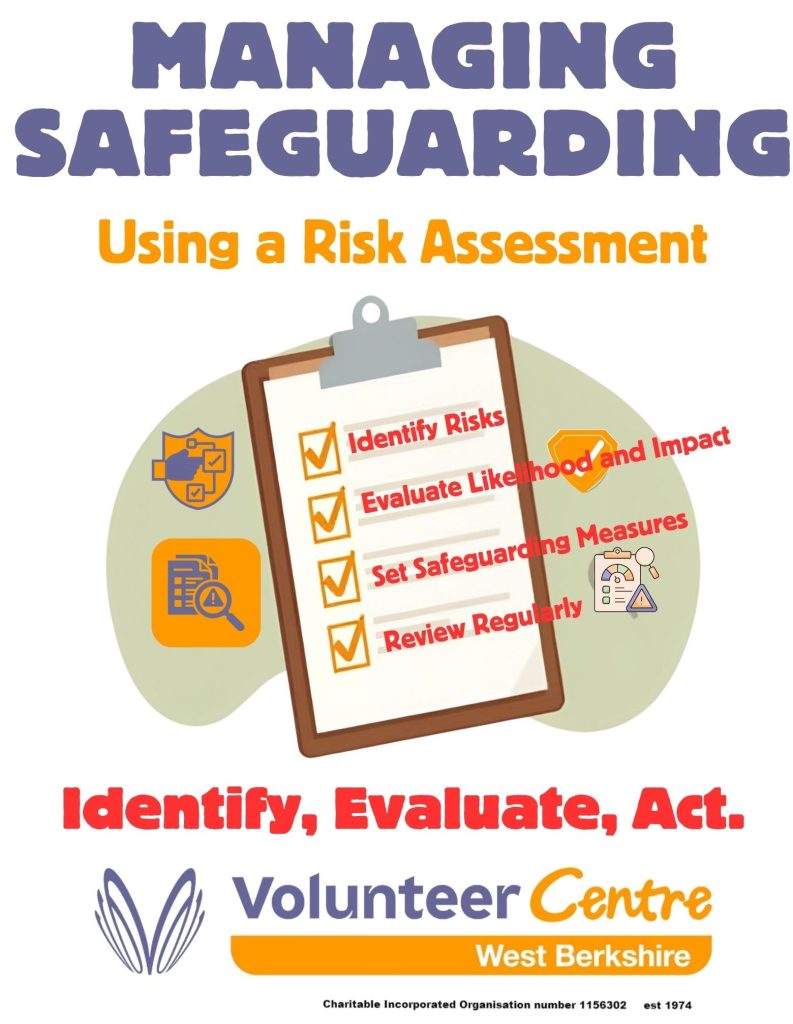
Even if a DBS check is not needed, your organisation still has a safeguarding responsibility. A risk assessment helps you identify potential risks and put in place controls to protect people. Key steps:
Identify Risks – Consider who might be harmed, how, and under what circumstances. Include volunteers, service users, and staff.
Evaluate Likelihood and Impact – Decide how serious each risk is and how likely it is to happen.
Set Safeguarding Measures – Examples include:
- Clear codes of conduct for staff and volunteers
- Reporting procedures for concerns or incidents
- Supervision and training
- Policies for lone working or home visits
Review Regularly – Update your risk assessment and safeguarding measures at least annually or after any incident.